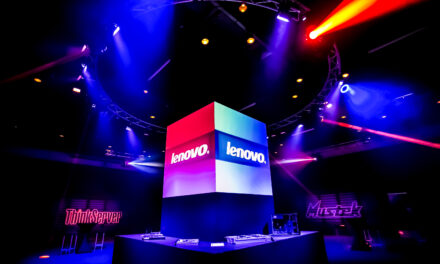

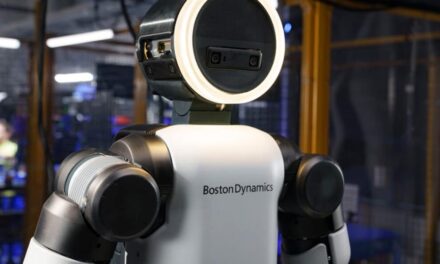
Last Monday, while Jensen Huang delivered his keynote at CES in Las Vegas, I had a front row seat for the Hyundai Motor Group and Boston Dynamics keynote.

And what I saw there was shocking.
I went into the presentation thinking it would be a preview of what might happen in the future. But I came out convinced it was proof of what will happen.
Here’s some video I shot:

That’s their Atlas robot. And as you can see, it’s becoming more than human-like in its movement and agility.
To me, the rapid advancement in robotics that Atlas represents shifts the conversation from whether humanoid robots will work to how many will be built and where they’ll be deployed.
It also makes me question how far the timeline has moved forward. Because the robot revolution is accelerating faster than most people realize.
And what I saw at CES made it clear that we’re in the early stages of a humanoid robot rollout.
From Viral Videos to Factory Floors
Boston Dynamics’ humanoid robot Atlas has been famous for years.
I’m sure you’ve seen videos of these robots doing backflips and balance tests.

Every viral clip from the company shows just how far robotics engineering has come. But what those videos didn’t show was how humanoid robots might scale.
CES changed that.
Hyundai made it clear that Atlas is moving out of the lab and into real industrial environments. The company has said it plans to deploy humanoid robots inside its own manufacturing operations later this decade, beginning in controlled factory settings and expanding from there.
Reports indicate that Hyundai intends to ramp up production toward tens of thousands of humanoid robots per year by the late 2020s, starting with its U.S. manufacturing facilities.
That kind of rollout doesn’t happen unless a company is confident it can be industrialized.
Hyundai owns an 80% controlling stake in Boston Dynamics, giving it direct control over both the capital and roadmap for Atlas’s deployment.
And the kind of commitment Hyundai made at CES marks an inflection point for the entire robotics industry.
It forces every other manufacturer to start deciding how quickly they need to follow Hyundai’s lead. Because there is a massive share of a rapidly expanding market up for grabs.
The global robotics market is already huge. Estimates put it at roughly $70 to $80 billion today, growing toward $180 billion by the end of this decade.

Source: marketdataforecast.com
That alone would make it one of the fastest-growing industrial sectors in the world.
But the growth of humanoid robots is projected on an even steeper curve.
Right now, the humanoid segment is still pretty small, measured in single-digit billions of dollars. But many projections call for 30% to 40% annual growth, with Goldman Sachs estimating the humanoid market could reach $38 billion by 2035.

And longer-term projections go even further.
Morgan Stanley calls humanoids a “$5 trillion market” by mid-century. While Elon Musk has an even more optimistic vision, predicting the valuation for his Tesla Optimus business potentially reaching $25 trillion.
Of course, those numbers aren’t guarantees. But they do explain why companies like Hyundai are moving now.
Robots have been part of factories for decades. There are already more than four million industrial robots operating worldwide, welding, painting and assembling products around the clock.
But traditional robots are specialists. They do one task extremely well in a fixed environment.
Humanoid robots need to be generalists. They also must be able to operate in spaces designed for humans. That means they need to be able to lift, carry, turn and manipulate tools without requiring an entire factory to be redesigned around them.
That kind of flexibility is exactly what Hyundai’s CES presentation focused on.
Atlas isn’t being pitched as a replacement for entire workforces. It’s being positioned to handle the most physically demanding and repetitive tasks first, like material handling and heavy lifting. These robots are also being built to handle the kind of long shifts that strain human workers and create injury risk.
If humanoid robots can reliably take on even a fraction of that workload, the return on investment becomes obvious very quickly. Because these tasks are universal.
My time at CES also confirmed this isn’t an isolated effort.
Across the robotics landscape, capital is flowing toward embodied machines. Startups building humanoid robots have raised hundreds of millions of dollars over the past year alone. And strategic acquisitions are accelerating, with autonomous driving and semiconductor companies buying robotics teams outright to secure talent and intellectual property.
As we talked about last week, even the chip industry is adjusting. Nvidia and its competitors are explicitly designing platforms for physical systems, not just data centers.
In that way, robotics is following the same pattern we saw with cloud computing and AI. First there’s a ton of research, then there’s a breakthrough that scales. After that comes integration into real workflows.
Robotics appears to be entering that third phase now.
Here’s My Take
This might feel shockingly sudden to you.
I was still surprised by how fluid and controlled Atlas looked on the CES floor, even knowing why robotics is accelerating right now.
It’s because several bottlenecks have broken at the same time. Sensors got cheaper, hardware got better, batteries last longer today and software has finally caught up. This is allowing AI systems to finally become capable of perception and planning in messy, real-world environments.
None of those breakthroughs alone would have been enough. But together, they compress the timeline.
What I saw at CES confirmed that humanoid robots are crossing from experimentation to deployment. Which means the robot revolution isn’t just a concept anymore.
It’s about to become an operational reality.
Regards,

Ian King
Chief Strategist, Banyan Hill Publishing
Editor’s Note: We’d love to hear from you!
If you want to share your thoughts or suggestions about the Daily Disruptor, or if there are any specific topics you’d like us to cover, just send an email to dailydisruptor@banyanhill.com.
Don’t worry, we won’t reveal your full name in the event we publish a response. So feel free to comment away!