
Happy Labor Day!
The markets are closed today, so I hope you’re enjoying the last unofficial weekend of summer.
But since this is a holiday devoted to American workers, I want to leave you with something I’ve been thinking a lot about recently.
For most of our history, getting more done usually meant working harder.
If you wanted to grow more food, you needed more farmers. If you wanted to build something bigger or faster, you needed more workers. And if you wanted to manufacture more products, you obviously needed more people on the factory floor.
Over the last two centuries, technology has changed this equation.
But AI could do it in a matter of years.
Doing More With Less
Think about the American farmer.
Two hundred years ago, farming required an enormous amount of human labor. Fields were plowed by hand or with animals, and crops were planted and harvested by armies of workers.
Then came tractors, combines and other machinery.
Those machines eliminated millions of agricultural jobs. But they also made each farmer dramatically more productive.

The same thing happened in factories.
Steam engines gave way to electric motors. Assembly lines gave way to automated machinery. Computers allowed workers to design, build and manage things that would have required entire teams just a generation earlier.
And something remarkable happened along the way.
We didn’t just produce more. We eventually started working less.
We went from a six-day workweek to five. The 12-hour factory shift gave way to the eight-hour day. And despite our inability to stop checking email, vacations have become commonplace.
Yet through all these changes, the average American worker became vastly more productive.

Since 1947, the amount of output produced for every hour Americans work has increased roughly 5X.
That’s the part of technological progress that’s easy to overlook.
The purpose of a machine isn’t simply to replace human labor. It’s to make human labor more valuable.
And now we’re about to give workers an entirely new generation of tools to become more productive.
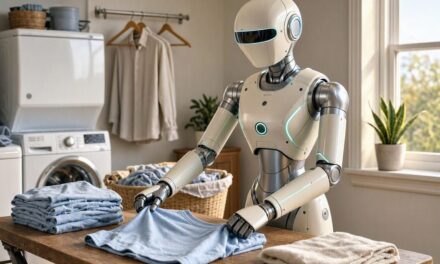
Artificial intelligence can already write computer code, analyze enormous amounts of data and perform research in seconds. It’s also helping robots recognize objects, follow spoken instructions and figure out how to perform physical tasks they weren’t specifically programmed to do.
And both technologies are improving quickly.
That’s reason for concern because, historically, technology destroys some jobs and changes many others.
But it also allows one person to accomplish far more in the same amount of time. And this time around, America may need automation for an entirely different reason.
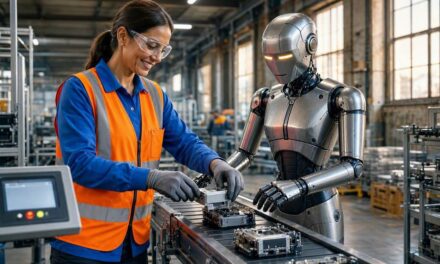
As I showed you last week, we’re entering a period when millions of older workers are retiring and many industries are already struggling to find enough people.
So the next great wave of automation could arrive at exactly the moment that we need it most.
Here’s My Take
The history of American progress isn’t a story about finding ways to make people work more.
It’s about finding ways to make every hour of work produce more.
That’s what the tractor did for the farmer, what automation did for the factory worker and what computers did for nearly everyone who works at a desk.
Now AI and robotics could take that idea much further.
These technologies won’t make human labor worthless. They could make every hour of actual human labor more valuable than ever before.
And that seems like something worth celebrating this Labor Day.
Regards,

Ian King
Chief Strategist, Banyan Hill Publishing
Editor’s Note: We’d love to hear from you!
If you want to share your thoughts or suggestions about the Daily Disruptor, or if there are any specific topics you’d like us to cover, just send an email to dailydisruptor@banyanhill.com.
Don’t worry, we won’t reveal your full name in the event we publish a response. So feel free to comment away!