

New AI models are arriving at a dizzying pace.
Anthropic released Fable 5.1 yesterday. OpenAI’s Astra could arrive within hours. And Elon Musk says a much more advanced Grok model is coming in the next week or so.
Recently, I shared Mark Zuckerberg’s vision for where all of this is heading.
And it was surprisingly optimistic.
Zuckerberg believes we’re spending too much time worrying about the jobs AI could replace and not enough time thinking about what it will allow us to create.
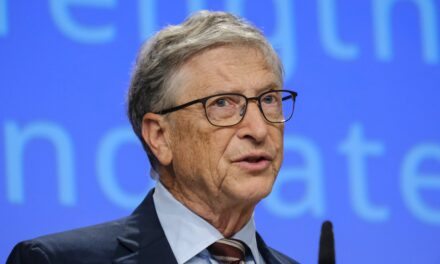
Now Bill Gates has weighed in, and he’s much less optimistic.
In fact, the man who helped usher in the computer revolution believes AI could soon create problems unlike anything humanity has ever faced before.
“This Time Really Is Different”
Gates recently published a nearly 6,000-word essay titled “The turbulent AI era is here. The choices we make now are critical.”
And he doesn’t waste much time getting to the point, saying: “AI for the first time can replace and even exceed human cognition.”
That’s why he believes this is different from previous technological revolutions.
When machines replaced millions of agricultural workers, new jobs emerged in factories and offices. But those jobs still required something machines couldn’t provide.
Human intelligence.
This time, Gates believes the technology can replace that too. “There will be some new jobs,” he writes, “but without the right policies there will be far fewer than exist today.”
And he expects the disruption to spread far beyond the white-collar jobs we normally associate with AI.
Gates specifically mentions law, medicine, customer service, software and manufacturing. What’s more, he expects “smart” robots to begin competing for some construction and hospitality jobs by the end of this decade.

And he believes replacing workers with cheaper AI or robots could have a compounding effect.
Gates writes: “Market forces will make adoption go faster and faster and, unless we intervene, there will be fewer good jobs available and the benefits will accrue to a small group.”
But jobs are only one of the risks Gates sees with AI.
He points out that instructions for building bombs, writing computer viruses and even creating biological weapons have existed online for years. But AI could make that information far easier to find and use.
“Even criminals with very limited skills will be able to target victims at every scale: individuals, companies, and governments.”
He’s especially concerned about cyberattacks and biology.
“Although AI will lead to lifesaving advances in drugs and vaccines,” Gates writes, “it will also make it easier to design a deadly new disease.”
And eventually, he worries that the threat won’t come from a human being.
Gates says AI systems already sometimes behave in ways their creators didn’t intend. As they become more capable, he warns that “we could lose control.”
He’s also concerned about what AI could do to children.
AI companions are always available. They can be endlessly patient and designed to tell us what we want to hear.

Gates compares that environment to “a big, protected greenhouse.”
He worries that children could miss some of the uncomfortable experiences that teach them how to interact with other people. And if AI simply gives students answers, they could miss out on the struggle that helps develop critical-thinking skills.
That’s a pretty bleak picture.
But Gates isn’t arguing that we should stop developing AI.
In fact, he believes it could dramatically accelerate scientific discovery.
He says researchers could use it to sift through enormous amounts of information, find patterns humans miss and identify promising experiments. And those capabilities could become available to far more people.
As I wrote about recently, Gates notes: “When intelligence is no longer the limiting factor that it is today, smaller companies will be able to compete with organizations that have far larger research budgets.”
He also sees enormous opportunities in medicine, agriculture and education.
He believes AI could help doctors diagnose patients in areas without enough specialists. It could give farmers better information about weather and their crops. And it could provide students with personalized tutoring.
As Gates puts it: “AI can improve life for people at every income level.”
But he doesn’t believe that outcome is guaranteed. Which is why he’s proposing some pretty radical solutions.
One comes from Gates’ experience watching caregivers look after his father as he suffered from Alzheimer’s disease. He writes: “Something in the care they gave my dad was irreplaceably human. No robot could or should have done it.”
That helped inspire an idea he calls “Human Reserved.”
It’s the idea that there will be some jobs AI and robots are perfectly capable of performing that we decide they shouldn’t do. They’ll be for humans only.
Gates also wants to change the financial incentives surrounding automation.
Today, companies pay payroll taxes when they hire workers. But Gates points out that investments in robots can often be deducted as business expenses.
“The tax system nudges you toward replacing people with machines,” he writes.
His solution?
“I believe we should tax AI tokens and robots.”
Gates argues that such a tax could slow the replacement of workers while generating money to help people who lose their jobs.
Because for Gates, the question is no longer whether AI will change the world.
It’s what we’re going to do about it.
Here’s My Take
I think Gates raises some legitimate concerns, and I’ve already covered many of these same topics in the Daily Disruptor.
AI is improving incredibly quickly, and there will be disruption along the way.
But I’m more optimistic about what comes next. Even Gates still believes AI could supercharge innovation and help solve some of the world’s toughest problems.
We might not know exactly what the AI economy will look like yet.
But I still believe the opportunities it creates will ultimately outweigh the jobs and industries it disrupts.
Regards,

Ian King
Chief Strategist, Banyan Hill Publishing
Editor’s Note: We’d love to hear from you!
If you want to share your thoughts or suggestions about the Daily Disruptor, or if there are any specific topics you’d like us to cover, just send an email to dailydisruptor@banyanhill.com.
Don’t worry, we won’t reveal your full name in the event we publish a response. So feel free to comment away!