

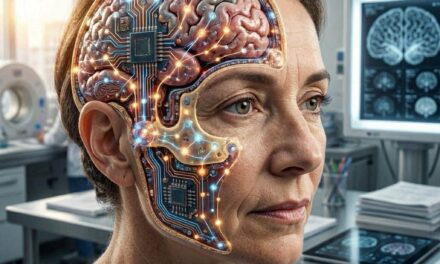
Artificial intelligence is rewriting the computing landscape.
It has to. Because the old model is running into bottlenecks everywhere.
Training frontier AI models now requires vast clusters of specialized chips, extraordinary amounts of electricity and entirely new data center architectures.
And the scale of the AI buildout is staggering.
But it’s necessary because everyone understands that artificial superintelligence (ASI) could be the most important technological breakthrough of this century… and beyond.
The race for more powerful AI might also depend on entirely new forms of computing.
But what if the next leap doesn’t come from better silicon chips at all?
What if nature has already solved part of this problem?
Because right now — as crazy as it sounds — researchers are renting computers built partly from living human brain cells.
And I believe this technology gives us an early glimpse into something truly profound.
Biological Computing
Moore’s Law tells us that if you want more computing power, you just need to make chips smaller, faster and more efficient.

Image: Wikipedia
That’s how we got from room-sized mainframes to smartphones. It also gave us the hardware driving the AI boom.
But now some researchers are exploring a radically different path.
Not better silicon, but living intelligence fused with silicon.
Two startups are already commercializing early versions of this idea. Australia’s Cortical Labs has built a system called CL1 that combines silicon hardware with about 800,000 living human brain cells grown in a lab.

Image: Cortical Labs
Those neurons sit on a chip, allowing researchers to send electrical signals into the network and read responses back out.
In effect, biology has become part of the computational system.
And it isn’t confined to a lab experiment.
Cortical Labs says CL1 can be purchased for around $35,000 or accessed remotely through what it calls “wetware-as-a-service.”
If that’s not mind-blowing enough, Swiss startup FinalSpark offers remote access to brain organoid bioprocessors through its Neuroplatform.

Image: FinalSpark
For about $500 per month, researchers can now rent biological computers over the internet to run experiments on living neural systems from anywhere.
Obviously, this is a niche market right now.
But it could become much bigger as AI pushes against the limits of conventional computing.
After all, compute is expensive and power is becoming increasingly scarce. A large AI model might need thousands of watts of energy to generate answers.
But the human brain runs on roughly 20 watts. That’s less than a dim light bulb.
And that contrast is why this field exists.
Researchers want to know whether living neurons can process certain signals more efficiently than traditional hardware, and whether entirely new forms of computing might emerge from that.
This isn’t purely theoretical either. Because we’ve already seen an early demonstration of what it could look like.
A few years ago, Cortical Labs’ DishBrain experiment made headlines when neurons connected to a chip learned to play Pong.

At the time, many people dismissed it as a novelty.
But I didn’t.
Because I know that breakthrough technologies can sometimes look ridiculous before they become revolutionary.
What’s more, companies like IBM and Intel have pursued neuromorphic computing — chips inspired by brains — for years. So it’s not like the idea is new.
But what’s happening today is taking it a step further.
Instead of merely mimicking biology, these systems actually use biology.
The technology is still fragile, scaling is uncertain and no one should mistake this for a replacement for GPUs.
It could prove revolutionary, or it could prove impractical. It’s simply too early to know.
But whether these first-generation systems end up working matters less to me than what they tell me about where computing could be headed.
Because they suggest that computing could be evolving beyond silicon. And that could prove vital as AI pushes existing computing architectures to their limits.
We know what happens when conventional approaches start running into constraints.
New computing architectures tend to emerge.
And these “neurocomputers” could be another example of this cycle.
Of course, using human brain cells for computing comes with its own set of serious ethical questions.
Who owns biological computing? And could advanced systems someday force us to rethink what counts as consciousness?
Those are issues regulators will need to grapple with sooner rather than later, so we don’t repeat the pattern we’re seeing with AI today, where policymakers are scrambling to catch up with the technology.
Still, I find it incredibly exciting.
Because if biology becomes part of computing, it could lead to something beyond faster and more efficient computers.
It could lead to entirely new ways for AI systems to learn and think.
Here’s My Take
Traditional computing wasn’t built to handle the demands of AI.
As AI continues pushing against the limits of today’s hardware, it will become increasingly important to discover new ways to compute.
And we already know the human brain does something today’s machines still struggle with. It learns, adapts and processes enormous amounts of information while using remarkably little energy.
I’m not suggesting that biological computers will completely replace today’s silicon chips. But I do think they point toward a future where computing might no longer rely on silicon alone.
Living neural systems could eventually become tools for disease modeling, drug discovery, adaptive intelligence and even entirely new training paradigms for AI.
Which means these early “wetware” experiments could soon stop looking like science projects…
And more like the first signs of a computing revolution.
Regards,

Ian King
Chief Strategist, Banyan Hill Publishing
Editor’s Note: We’d love to hear from you!
If you want to share your thoughts or suggestions about the Daily Disruptor, or if there are any specific topics you’d like us to cover, just send an email to dailydisruptor@banyanhill.com.
Don’t worry, we won’t reveal your full name in the event we publish a response. So feel free to comment away!