

A few weeks ago, I explained why I wasn’t particularly worried when Congress failed to advance the CLARITY Act.
The legislation was supposed to establish clearer rules for cryptocurrencies. But even after it stalled in the Senate, the Securities and Exchange Commission (SEC) was moving forward with plans to give crypto companies more freedom to develop new products.
And despite the setback, bitcoin and Ethereum had both climbed more than 10%.
As we’ve seen with artificial intelligence and other disruptive technologies, innovation doesn’t necessarily wait for Washington.
But with the midterm elections now less than two weeks away, there’s another reason investors should be paying attention.
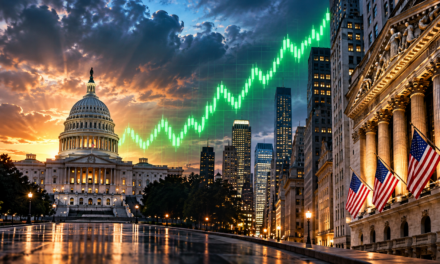
Because while the outcome on November 3rd might not determine the future of these technologies, it could have an enormous impact on the stock market.
And there are reasons to believe that this impact could be surprisingly positive.
Why the Midterms Matter to Wall Street
Since 1950, the S&P 500 has finished higher 12 months after every midterm election.
That’s 19 consecutive elections, with an average gain of approximately 15.1%.
And that includes periods of recession, inflation, war and political uncertainty, regardless of which party gained control of Congress.
Why does this happen?
I think much of it comes down to uncertainty.
In the months leading up to an election, investors worry about taxes, regulations, government spending and which industries might benefit under a new Congress.
Some hold off on making major investments until they have a better idea of what Washington will look like.
But once the votes are counted, some of that uncertainty disappears. And historically, the market hasn’t taken long to respond.
In fact, the S&P 500 has gained an average of 7.7% during the first three months following midterm elections.
That’s roughly half the average gain recorded over the following year.
My colleague Addison Wiggin has taken that historical pattern a step further. Based on his calculations, a similar rally following this year’s midterms could add as much as $10.5 trillion to the S&P 500’s total market value.
That’s an extraordinary amount of money. And while there’s no guarantee history will repeat, it’s a possibility investors should be aware of.
Especially given what’s happening in technology today.
Artificial intelligence is transforming how businesses operate. Companies are investing billions in robotics, automation and new computing infrastructure.
And as we discussed last month, some of the world’s largest financial institutions are building systems that could eventually move stocks and other assets onto blockchain networks.
These developments aren’t happening because one political party supports them.
They’re happening because businesses see opportunities to make things faster, cheaper and more efficient.
And that isn’t likely to change after November 3rd.
But the election could influence how these technologies are regulated and where investors put their money.
After all, Congress still controls agency budgets and can pressure regulators through hearings and oversight. So even if the SEC moves forward without new legislation, the makeup of the next Congress could influence what happens next.
Addison recently attended a meeting on Capitol Hill with members of Congress from both parties, business executives and some of the country’s leading AI experts.
They didn’t agree on everything, but Addison said there was one thing nearly everyone seemed to recognize.
“The AI trade is here to stay.”
And I couldn’t agree more.
But recognizing AI’s potential and knowing which stocks to buy are two very different things. And that’s where the next few months could get interesting.
If the market follows its historical post-midterm pattern, investors could see a substantial rally as these technological revolutions continue to develop.
But not every technology company will benefit equally.
Some are spending enormous amounts of money with little to show for it. Others are already finding ways to turn new technologies into growing businesses.
And as we’ve discussed in the Daily Disruptor, knowing the difference could be one of the biggest challenges facing investors.
Here’s My Take
I don’t know which party will control Congress after November 3rd.
And I’m not convinced that the outcome will matter nearly as much to the long-term future of AI, robotics or blockchain technology as some people think.
But I do believe the election could influence how Wall Street values the companies involved, especially if history repeats and stocks rally over the following 12 months.
That’s why I think you’ll want to hear what Addison has to say.
He’s been studying the historical relationship between midterm elections and the stock market, and he’s putting his forecast to the test.
On Tuesday, October 27, at 8 p.m. ET, Addison is hosting a free live presentation where he’ll share his predictions for the House and Senate and explain what he believes the results could mean for investors.
He’ll also reveal three potential trades identified by the AI system behind his Grey Swan Trader service.
And he’s giving attendees two FREE stock recommendations, including one to consider buying before November 3rd and another he believes investors should sell.
With so much happening in technology and the financial markets, I think it’s worth hearing his perspective.
Click here to reserve your free spot for Tuesday night.
Regards,

Ian King
Chief Strategist, Banyan Hill Publishing
Editor’s Note: We’d love to hear from you!
If you want to share your thoughts or suggestions about the Daily Disruptor, or if there are any specific topics you’d like us to cover, just send an email to dailydisruptor@banyanhill.com.
Don’t worry, we won’t reveal your full name in the event we publish a response. So feel free to comment away!