
America needs a lot more electricity.
After all, artificial intelligence is driving the construction of massive new power-hungry data centers. Electric vehicles are adding new demand to the grid. And factories are coming back to American soil.
But generating more electricity is only part of the challenge.
The way we manage it needs to change too.
Millions of homes and businesses can now generate their own power. Batteries can store it, and sophisticated software can decide when that electricity should be used, stored or sent somewhere else.
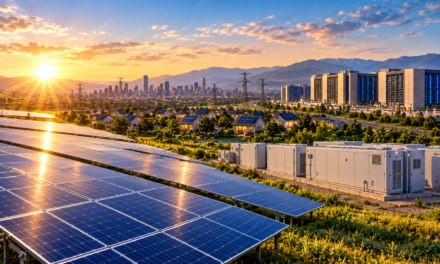
Solar is right at the center of this transformation.
And I believe it could create an enormous opportunity for investors.
Solar’s New Role
Solar power has always had one obvious limitation.
The sun doesn’t shine 24/7.
On a bright afternoon, a solar farm might produce more electricity than the grid needs. But a few hours later, just as people are getting home and turning on their appliances, that production starts falling.
This mismatch has historically made solar less reliable than power sources that can run whenever they’re needed.
But batteries are changing the equation.
Instead of sending every electron directly onto the grid, solar farms can now store some of that electricity during the day and release it later.

And we’re starting to deploy these systems at enormous scale.
According to the U.S. Energy Information Administration, developers plan to add 43.4 gigawatts of new utility-scale solar capacity to the U.S. grid this year.
That’s 60% more than last year.
Battery storage is growing even faster. The U.S. added 8.3 gigawatts of new battery capacity in the first half of this year, and another 14 gigawatts is planned for the second half.
Put those two technologies together, and you have more reliable solar energy.
But storing all that electricity creates another challenge. Someone still has to decide when to use it, when to save it and when to send it back to the grid.
We’re increasingly relying on software to do this for us. And that’s where something called a virtual power plant comes in.

Despite the name, it isn’t really a power plant at all. It’s a network of smaller energy resources that are connected and controlled by software.
Consider 10,000 homes with solar panels and batteries.
Most of the time, those systems operate independently. But on a hot summer afternoon, electricity demand might suddenly surge as millions of air conditioners kick on.
Instead of firing up another power plant, a utility could ask those 10,000 batteries to send some of their stored electricity onto the grid.
Individually, each battery doesn’t make much of a difference. But together they can act like a power plant. And software can coordinate all of this power automatically based on electricity prices, weather and demand.
In other words, solar isn’t just becoming a bigger source of electricity. It’s becoming part of a much more flexible energy system.
That’s why I recommended SolarEdge (Nasdaq: SEDG) to my Strategic Fortunes readers back in June.
SolarEdge has spent years developing the equipment and software that control what happens to electricity after solar panels generate it.
Its new Nexis system is a good example.

Image: solaredge.com
Nexis combines a solar inverter, modular battery storage and software into a single home energy system. This system can intelligently manage how electricity moves between a home’s solar panels, battery, appliances and the grid.
And what I heard at SolarEdge’s Investor Day last month made me even more excited about where this market is heading.
Management said the solar industry is moving from systems built mainly to generate electricity toward systems that combine solar with storage.
SolarEdge already has more than 4 million residential systems installed around the world. Yet around 90% of them don’t have batteries. That’s an enormous installed base that could eventually be upgraded with storage.
SolarEdge is also taking its energy-management expertise in a promising new direction.
AI data centers.
The company is working with semiconductor giant Infineon on a new kind of transformer designed to move electricity more efficiently from the grid into these massive facilities.
SolarEdge is targeting efficiency above 99%.
It’s already testing technology that can move electricity more efficiently through AI data centers. And it’s working with Nvidia on a system designed to safely deliver power directly to the racks of AI chips inside them.
So a company that made its name managing electricity from rooftop solar panels is now using that expertise to help solve the power problems facing AI data centers.
And SolarEdge isn’t alone. The entire solar industry is evolving.
Solar is no longer just about putting panels on roofs or building massive farms in the desert. It’s now part of a larger system that includes batteries, software and the grid itself.
The EIA expects nearly 70 gigawatts of new solar generating capacity to come online in the U.S. during 2026 and 2027.
Meanwhile, utility-scale battery capacity has been growing at an average annual rate of 70% over the past three years.

That’s a lot of new electricity that will need to be stored, controlled and delivered where it’s needed.
Here’s My Take
I believe the next phase of the solar boom won’t be driven by panels alone.
It will also be driven by the batteries, software and power electronics that make solar more useful to the grid.
And as America’s electricity needs continue to grow, so will the opportunity.
Regards,

Ian King
Chief Strategist, Banyan Hill Publishing
Editor’s Note: We’d love to hear from you!
If you want to share your thoughts or suggestions about the Daily Disruptor, or if there are any specific topics you’d like us to cover, just send an email to dailydisruptor@banyanhill.com.
Don’t worry, we won’t reveal your full name in the event we publish a response. So feel free to comment away!