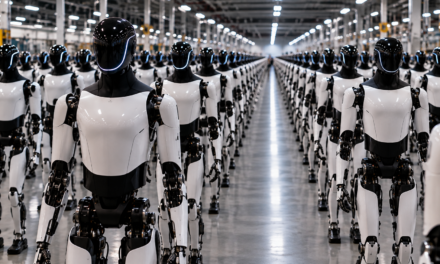

Yesterday, I showed you how Tesla is running into an unexpected problem as it prepares to build millions of Optimus robots.
It can’t get enough memory chips.
In fact, the shortage has become such a concern that Tesla is reportedly scaling back how much memory it plans to put into its first generation of robots.
But Tesla isn’t alone.
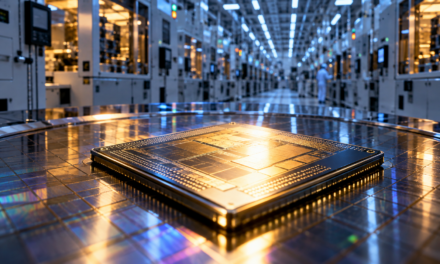
Artificial intelligence has created enormous demand for the chips that store and process information. And the companies building AI data centers are competing for some of the same manufacturing capacity needed to supply everything from smartphones and computers to cars and robots.
That’s creating a problem for companies that need these chips.
But it could also create an enormous opportunity for the companies that make them.
This week’s chart shows us why.
The AI Memory Crunch
Our charts this week come from Andreessen Horowitz’s most recent State of the Markets report.
They show how the enormous demand for AI computing power is affecting the price of memory chips.

As you can see, memory prices have skyrocketed over the past year.
And it’s not just one kind of memory that’s getting more expensive. Both DRAM, which computers use to temporarily store information, and NAND flash, which stores data long-term, have seen enormous price increases.
These chips are found in practically every modern computer, smartphone and electronic device.
And a big reason prices are climbing is the enormous demand for memory created by AI.
Think about what goes into building an AI data center.
Nvidia’s powerful GPUs do much of the heavy lifting when running AI models. But those processors need enormous amounts of memory to work efficiently.
One particularly important type is called high-bandwidth memory, or HBM. It’s designed to move huge amounts of information to and from AI processors at extremely high speeds.
And as companies like Microsoft, Amazon, Google and Meta spend hundreds of billions of dollars expanding their AI infrastructure, demand for that memory has exploded.
That’s creating a problem for the rest of the technology industry.
You see, the companies that manufacture memory chips have limited production capacity. And when they devote more of that capacity to the advanced memory used in AI servers, there’s less available for some of the other products they manufacture.
That includes the conventional DRAM used in PCs, smartphones and other electronics.
So even companies that aren’t building AI systems can end up paying more for memory.
That’s exactly what’s been happening. According to semiconductor research firm TrendForce, conventional DRAM contract prices were expected to rise as much as 95% in the first quarter of 2026 alone.
NAND flash prices were also expected to climb as much as 60% during that same period.
And those increases didn’t stop there.
TrendForce expects conventional DRAM prices to rise another 10% to 15% in the fourth quarter, with NAND prices increasing 15% to 20%.
In other words, this surge in demand is affecting the memory industry from top to bottom.
And the consumers are feeling it in their wallets.
PC manufacturers are dealing with higher component costs. Smartphone makers are facing the same problem. And some companies are responding by reducing how much memory they put into their products.
That’s exactly what Elon Musk is doing with Optimus.
But for the companies that manufacture memory, the shortage has created an enormous opportunity.
Unlike the AI model business, where new competitors seem to appear every week, memory manufacturing is dominated by a relatively small group of companies. Samsung Electronics, SK Hynix and Micron Technology (Nasdaq: MU) are the three major producers of DRAM.
These companies have spent decades developing the technology and manufacturing expertise needed to produce memory chips at enormous scale.
And expanding that production isn’t easy.
Building a semiconductor factory can cost billions of dollars. It requires specialized equipment, highly trained workers and years of planning before production can begin.
Even after a new factory opens, it takes time to get manufacturing running at full capacity.
So when demand suddenly increases, manufacturers can’t simply turn on another production line and make the shortage disappear.
That’s one reason the current supply crunch could last longer than many people expect. In fact, Micron recently warned that memory supply and demand could become even tighter in 2027 and 2028.
It’s also one reason we’ve been so bullish on Micron in Strategic Fortunes, where we recently locked in a 1,044% gain by selling half our position.
Here’s My Take
Historically, the memory chip industry has been highly cyclical.
When manufacturers produced too many chips, prices collapsed. When demand outpaced supply, prices soared.
But AI could change that cycle.
After all, the world’s largest technology companies are spending a massive amount of money on AI infrastructure, creating enormous demand for advanced memory chips.
And with production struggling to keep up, memory manufacturers could enjoy higher prices for years to come.
Regards,

Ian King
Chief Strategist, Banyan Hill Publishing
Editor’s Note: We’d love to hear from you!
If you want to share your thoughts or suggestions about the Daily Disruptor, or if there are any specific topics you’d like us to cover, just send an email to dailydisruptor@banyanhill.com.
Don’t worry, we won’t reveal your full name in the event we publish a response. So feel free to comment away!