
We’ve talked before about China’s widening lead in the rare earth race.
The harsh reality is that the U.S. might lead in AI research, but China controls nearly every step of the mineral supply chain that makes advanced hardware possible.
These rare earth materials rarely make headlines, yet they determine who can build data centers, who can manufacture the hardware that powers AI and who controls the supply chain for the next industrial era.
And unless we close the rare earths gap, the U.S. could end up holding the blueprints for the future without having the materials to build it.
Last week, something happened that pushed this gap even wider. And it offered a stark reminder that China’s rare earths lead isn’t holding steady…
It’s accelerating.
China’s Surprising New Plant
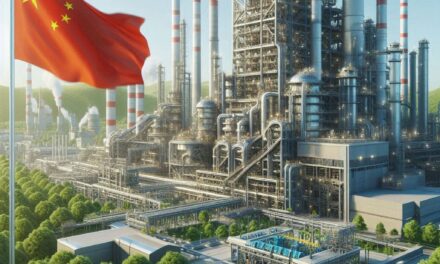
What caught my attention was an industry update about a new mineral processing plant built in China’s Shanxi Province.
Once I dug into the technical details, it became clear that this wasn’t a standard project at all. It was a meaningful step forward in exactly the part of the supply chain where China already has a major advantage.
For years, one of the biggest challenges in mineral production has been what to do with low-grade ore.

Image: geologyhere.com
This material has too much reactive silica, which corrodes equipment and forces refineries to consume more energy and chemicals.
Most companies around the world treat low-grade ore as waste.
But a European startup called IB2 developed a process that changes this paradigm. It makes low-grade ore usable by removing up to 70% of its silica.
This process can cut refining costs by as much as 40%. And it turns discarded rock into usable feedstock for aluminum and potentially rare earth extraction.
The new plant in Shanxi is the first to deploy this process at an industrial scale. That means ore that would normally be thrown away can now move straight into China’s manufacturing pipeline.
But that’s not the most stunning part of the story.
It’s that the entire plant was built in just 10 months.
To put that in perspective, the average mining or processing project in the United States can take seven to 10 years just to clear the regulatory process. In Europe, timelines can stretch even further. That’s why so many critical projects in the West never make it off the drawing board.
And it’s why I keep saying that China is moving at a completely different speed than the rest of the world.
After all, China already produces more than half of the world’s aluminum. It processes more than 70% of global lithium and cobalt. And it controls 85% of rare earth refining.

It also controls more than 90% of magnet production. These are the same magnets used in electric vehicles, robotics, drones, wind turbines and precision military systems.
So when China finds a way to turn waste rock into useful material, it’s doing far more than making its supply chain more efficient.
It’s increasing China’s control over the materials that power today’s most important industries.
And it comes at a time when demand for minerals is rising across almost every sector. EVs require 6X more mineral input than gasoline cars. Offshore wind systems use 13X more minerals than natural gas plants.
And as AI data centers grow, analysts expect copper demand to roughly double by the end of the decade.

Source: BHP
The world is clearly heading into a mineral supercycle. And China is preparing for it by expanding supply in ways the rest of the world can’t match.
And there’s another layer to this story.
Earlier this month, Beijing began issuing new export licenses to select rare earth magnet producers. Now, this might look like China is easing restrictions. But viewed alongside the new IB2 facility, it shows that China is taking a more active role in deciding which companies — and which countries — get access to these materials.
The United States has focused on the visible parts of the tech race like AI models, semiconductors and advanced robotics. But the material foundation underneath those industries is becoming more important by the month.
That’s why this new plant in Shanxi deserves your attention.
If China can produce more of these critical minerals cheaper and faster, it will shape who leads in the key industries of the next decade.
And the fact that this plant was up and running in only 10 months signals that China is not simply defending its rare earth minerals lead.
It’s accelerating it.
Here’s My Take
China’s new plant in Shanxi shows how important minerals have become.
The countries that control the inputs for AI, clean energy and advanced manufacturing will shape the future. And right now, China is building that capacity faster than anyone else.
If the United States wants to stay competitive, we need to treat mineral processing as a national priority. Because the Genesis Mission won’t matter if we can’t secure access to these critical materials.
Does the U.S. have what it takes to build the industrial foundation needed to compete in the next decade of technology? Or will China continue to widen the gap?
The answer will determine far more than who leads in AI.
It will determine who builds the future.
Regards,

Ian King
Chief Strategist, Banyan Hill Publishing
Editor’s Note: We’d love to hear from you!
If you want to share your thoughts or suggestions about the Daily Disruptor, or if there are any specific topics you’d like us to cover, just send an email to dailydisruptor@banyanhill.com.
Don’t worry, we won’t reveal your full name in the event we publish a response. So feel free to comment away!