


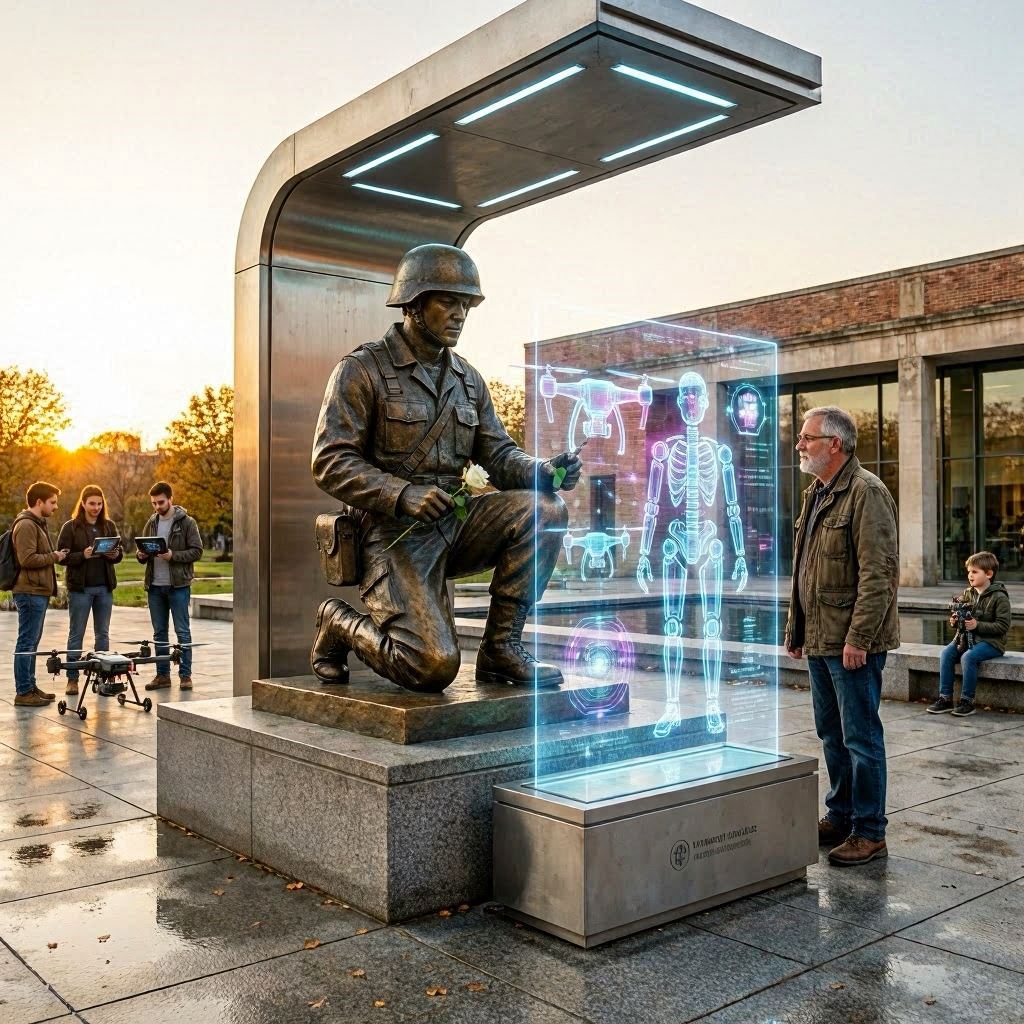
This Memorial Day, millions of Americans will gather for ceremonies, parades and military flyovers.
Families will place flags beside headstones. Communities will pause for remembrance. And fighter jets might streak overhead in tight formation while veterans march through town squares.
These traditions honor sacrifice and service.
But I suspect something else is happening too.
Because many of the technologies increasingly surrounding these ceremonies don’t just represent military history.
They could also offer us a preview of where warfare is heading next.
The Next Battlefield Is Already Taking Shape
Throughout history, war has accelerated technological change.
Radar advanced during World War II.

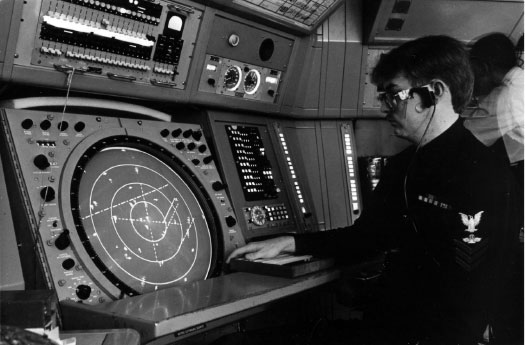
Image: Naval History & Heritage Command
The internet began as a Defense Department project. And GPS was originally built for military use before becoming something most of us rely on every day.
Military necessity has a way of pulling the future forward.
And we’re starting to see it happen again as artificial intelligence becomes one of the military’s most important technologies.
AI is being used today to help military analysts sort through enormous amounts of intelligence data. It assists with target recognition, identifies patterns that humans might miss and helps decision-makers process information faster than traditional systems allow.
Meanwhile, autonomous systems are changing the economics of warfare.
We’re seeing this play out in Ukraine, where relatively inexpensive drones have repeatedly destroyed tanks and equipment worth millions of dollars.


Image: Wikimedia Commons
And it’s forcing military planners to rethink assumptions that have guided modern warfare for decades.
Intelligence has always shaped warfare. The Cold War made that abundantly clear.
But today, AI is changing the scale of that advantage.
Military power no longer depends solely on building bigger platforms and spending more money. Increasingly, it also depends on who can collect, process and act on information the fastest.
Because on a modern battlefield, speed matters.
Not just missile speed, but decision speed.
The side that identifies threats faster, processes information faster and adapts faster gains an enormous advantage.
And AI happens to excel at exactly those tasks. That’s one reason defense spending around artificial intelligence has accelerated.
Companies like Palantir (Nasdaq: PLTR) — which I identified as my #1 Strategic Fortunes stock pick of 2024 before it shot up over 780% — and Anduril are building AI-powered military systems designed to analyze intelligence, coordinate autonomous platforms and improve battlefield decision-making.
At the same time, defense planners increasingly talk about “human-machine teaming.”
Not replacing soldiers, but enhancing them. The idea is for humans to still provide judgment, while machines increasingly provide scale.
Again, that’s because modern conflicts generate overwhelming amounts of information. There’s satellite imagery, sensor data, drone feeds, communications traffic and real-time battlefield signals arriving all at once.
No human can process this massive amount of data alone.
But AI can.
And this is changing how military strength is measured.
It’s no longer just about who has the most troops, the biggest weapons systems or the largest defense budget.
Increasingly, it’s being defined by intelligence.
Here’s My Take
Memorial Day will always be about honoring those who served and sacrificed.
And I hope you take a few moments today to reflect on the men and women who made the freedoms we often take for granted possible.
But it’s also true that military innovation rarely stays confined to the battlefield. Technologies developed during moments of conflict often reshape the civilian world afterward.
I look forward to a future where we no longer need war.
Until then, I believe the decisive advantage in any conflict will increasingly belong to whoever controls the best intelligence systems, autonomous platforms and AI infrastructure.
And years from now, I’m convinced we’ll look back at today’s Memorial Day flyovers the same way previous generations looked at early aviation demonstrations.
Not just as tributes to the past.
But as a glimpse of the future.
Regards,

Ian King
Chief Strategist, Banyan Hill Publishing

Editor’s Note: We’d love to hear from you!
If you want to share your thoughts or suggestions about the Daily Disruptor, or if there are any specific topics you’d like us to cover, just send an email to dailydisruptor@banyanhill.com.
Don’t worry, we won’t reveal your full name in the event we publish a response. So feel free to comment away!