


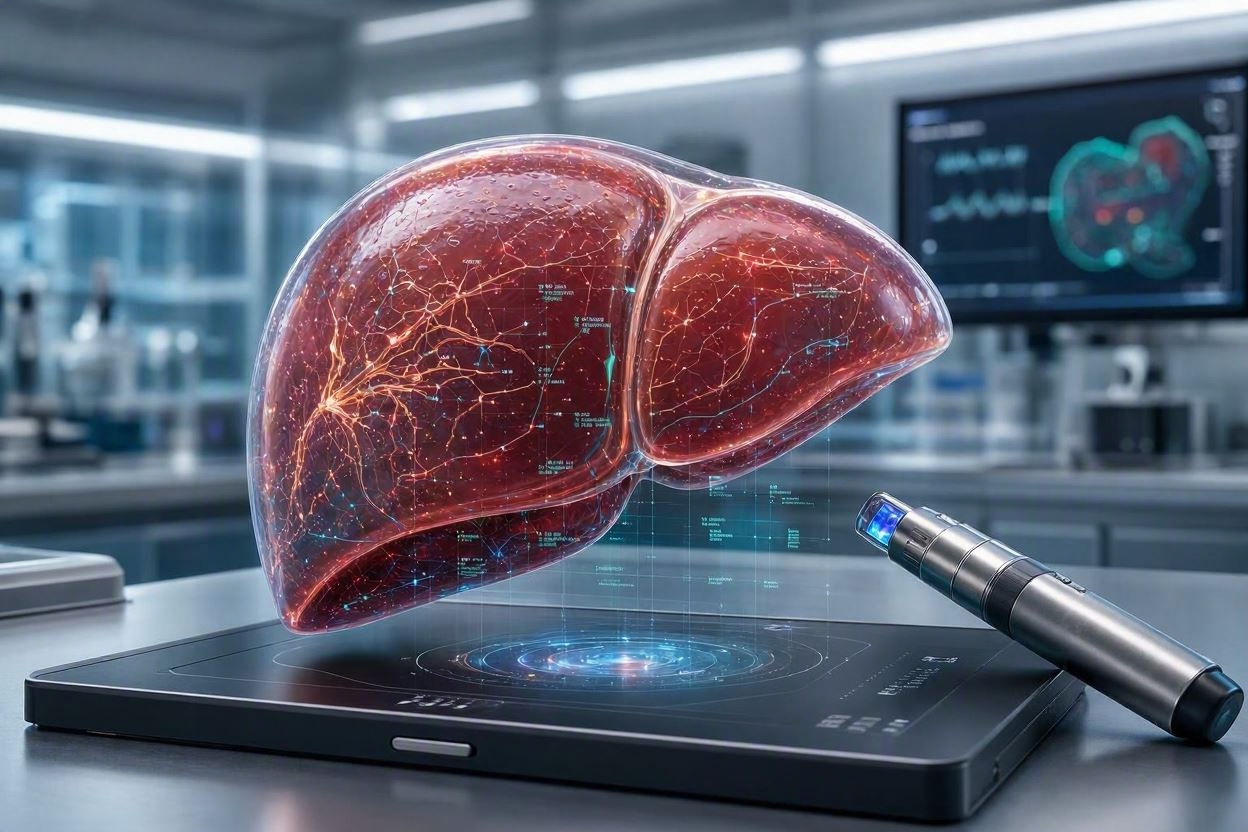
Before a new drug reaches its first human volunteers, it could soon be tested on thousands of people who don’t exist.
Some could be young. Others might be elderly.
Some could have heart disease, diabetes or a rare genetic condition. There may even be some who are pregnant.
Researchers will be able to give each one of these virtual patients the same experimental medicine and watch how their bodies respond. And if the drug triggers an immune reaction or creates a dangerous side effect, they’ll find out before a real person is put at risk.
To be clear, this isn’t some futuristic fantasy.
The U.S. government is already spending hundreds of millions of dollars to make virtual drug trials possible.
And if it succeeds, the first person to receive tomorrow’s newest medicine might not be human at all.
Building a Virtual Patient
In our last issue, I showed you how the FDA is allowing drugmakers to replace some animal tests with AI simulations and lab-grown human tissue.
But the government wants to take things much further.
The Advanced Research Projects Agency for Health (ARPA-H), is investing up to $125 million in a program called CATALYST. Its goal is to predict whether a drug is safe before human trials begin.
To do that, researchers need to understand where a drug goes after it enters your body.
Which organs does it reach? How does your body break it down? And how long does it take to leave?
These questions can make the difference between a lifesaving medicine and a dangerous one.
A drug might work perfectly against its intended target but turn toxic when the liver breaks it down. It might build up inside the kidneys. Or it could reach the heart and interfere with its rhythm.
CATALYST is funding several teams to predict these problems.


For example, Draper Laboratory is combining patient records, human tissue and lab-grown organs to predict how different people might respond to the same treatment.
Inductive Bio is building AI models to spot toxic effects in the liver and heart.
And researchers at the University of North Carolina are developing models for antibody drugs that account for pregnancy, when a medicine can affect both the mother and developing child. These models could help identify dangerous treatments without putting either one at risk.
And private companies are pursuing this same goal.
GenBio AI, co-founded by Nobel Prize winner David Baker and AI scientist Eric Xing, recently unveiled a virtual-cell system called AIDO Cell.


Image: GenBio AI
Most biological AI models focus on one part of a cell, such as DNA, proteins or gene activity.
AIDO Cell tries to connect them.
Researchers can change a gene or introduce a drug, then watch the predicted effects spread from DNA and RNA through proteins and across the cell. The model also remembers each change, allowing researchers to test a series of treatments and see how their effects build over time.
In an early demonstration, AIDO Cell recreated the known effects of the leukemia drug imatinib.
It still has a long way to go before it can reliably predict how new drugs will behave. But AIDO cell offers a glimpse of what virtual drug testing could become.
Of course, a virtual cell isn’t the same thing as a virtual patient. And researchers haven’t created a complete digital copy of the human body yet.
Most of today’s models focus on a particular organ, biological process or type of risk. One might predict liver damage. Another might estimate the chance of an irregular heartbeat.
But these separate models could eventually work together to reduce or even eliminate our reliance on animal testing.
That means a drugmaker could soon test the same medicine against models of the liver, heart, kidneys and immune system. It could also adjust the patient’s age, genetics and existing health conditions.
That way, researchers could receive thousands of answers based on many different versions of human biology.
But building virtual patients is only half the battle.


The harder part may be convincing the FDA to trust them.
That’s why ARPA-H is involving regulators and drugmakers from the start. The NIH has also committed more than $150 million to develop and test human-based models that produce the same results in different laboratories.
The FDA will judge each model by a simple standard: Does it reflect human biology, and is it reliable enough for the job?
A liver model might be accepted for spotting one type of liver damage. A heart model might detect a dangerous rhythm.
And each successful model could replace another animal test.
Here’s My Take
There are still serious limits to what virtual patients can tell us.
Human organs constantly communicate with one another. So a drug that helps one part of the body can cause unexpected problems somewhere else. Genes, age, diet and other medications can also change how someone responds. And an extremely rare side effect may never appear in the data used to train an AI model.
So I don’t expect virtual patients to replace human clinical trials or eliminate animal testing overnight.
But AI doesn’t need to recreate the entire human body to transform drug development. It only needs to answer certain questions better than the methods we use today.
That means the virtual patient of the future probably won’t arrive as a perfect digital human.
It will be built one organ, one prediction and one replaced animal test at a time.
Regards,

Ian King
Chief Strategist, Banyan Hill Publishing

Editor’s Note: We’d love to hear from you!
If you want to share your thoughts or suggestions about the Daily Disruptor, or if there are any specific topics you’d like us to cover, just send an email to dailydisruptor@banyanhill.com.
Don’t worry, we won’t reveal your full name in the event we publish a response. So feel free to comment away!