


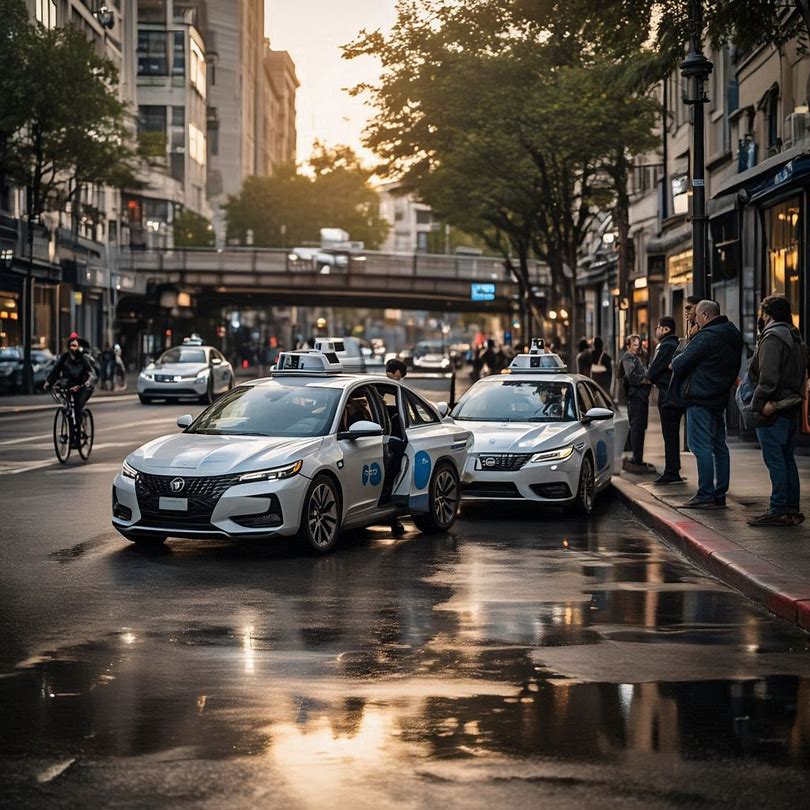
Last August, I wrote about the robotaxi race at a time when we were hearing a lot of promises from Tesla.
Elon Musk was talking about a future where millions of cars would earn money while their owners slept.
Meanwhile, Waymo was already giving paid rides. But the company was expanding at a pace that felt deliberately slow.
At the time, I framed the race as a question of timing. Would Tesla’s bold, software-first vision leapfrog everyone else? Or would Waymo’s cautious, capital-intensive approach end up winning by default?
Six months later, we’re getting closer to these answers. But there’s still a lot of uncertainty.
Because both companies are having to deal with the real world. And the real world has a way of altering even the best-laid plans.
The Bottleneck is Reality
Earlier this year, Tesla made a big change to its self-driving strategy.
It stopped selling Full Self-Driving (FSD) as a one-time purchase and shifted it entirely to a subscription model.
On the surface, that sounds like a normal software move. After all, “recurring revenue” is one of Wall Street’s favorite phrases.
But this was less a growth tweak and more of an admission that the company’s technology isn’t fully ready yet.
Tesla framed FSD as a software unlock that would eventually turn a regular car into a robotaxi. Buy it once, and you were supposedly buying into a future cash-generating machine — one that justified a much higher valuation.
That story only works if both the software and existing hardware proved sufficient for autonomous driving.
So far, that hasn’t been the case.
Autonomy has turned out to be harder and messier than the company anticipated. Tesla’s limited robotaxi pilot in Austin made that clear.


Image:YouTube
Some of the footage looked impressive. But other moments were more revealing, like when a robotaxi swerved into the wrong lane or braked erratically around stationary vehicles.
These moments exposed the gap between a controlled demo and real-world driving. And the farther true robotaxi capability gets pushed out, the harder it becomes to sell FSD as a permanent asset today.
That’s why Tesla chose flexibility, moving to a subscription model that lowers customer commitment.
This move also acknowledges how far away full autonomy still is. Which isn’t to say that Tesla is giving up on its robotaxi ambitions.
But it does mean that autonomy isn’t behaving like a software update. It’s behaving like the complicated, real-world infrastructure project it actually is.
And that could have an impact on the company’s bottom line.
Tesla’s autonomy story has always carried an enormous implied value. Robotaxis are often described as a trillion-dollar opportunity, and global ride-hailing already generates roughly $300 billion a year.


Add autonomy and remove drivers, and you can see how people get to trillion-dollar math very quickly.
The problem is that this math only works if the cars can actually run, all day, in messy cities, without supervision.
That is where Waymo comes in.
Waymo doesn’t talk like Tesla. It doesn’t sell a dream to retail investors, nor does it promise any timelines.
It just runs cars.
Waymo’s driverless service now operates in multiple U.S. cities, with fully autonomous rides and no safety drivers. The company’s vehicles have logged tens of millions of real-world miles.
One of my analysts recently saw a Waymo “in the wild” on the streets of Baltimore.


Image: WBAL
But despite Waymo’s steady progress, the company’s slow expansion frustrates people who want a clean winner.
I don’t see it that way. From a business perspective, this is exactly what you’d expect from a company that understands what it is building.
Robotaxis are a fleet business, and fleet businesses live and die on utilization rates, maintenance costs, insurance, uptime and regulatory trust. Every extra percentage point of reliability matters.
And every public incident matters just as much.
During a recent power outage in San Francisco, several Waymo vehicles stopped in intersections because their systems defaulted to safety protocols that required remote confirmation.


Image: Fox
From a technical standpoint, that behavior makes sense. From a comedy standpoint, it got a solid chuckle out of me.
But from a city’s standpoint, this kind of operational gridlock is unacceptable.
Waymo was forced to explain itself, and announced fleet-wide software and emergency protocol updates to prevent a repeat.
It’s easy to interpret this as a sign of failure. But I see it as a sign that autonomous driving technology has collided with reality.
When a technology moves from demo to deployment, there’s often a pushback phase. That’s happening with autonomous vehicles now.
In San Francisco, ride-hail drivers have protested robotaxis, arguing that they create safety risks and threaten jobs. City officials have raised concerns about traffic disruptions and emergency response. State regulators are asking harder questions about transparency and incident reporting.
Meanwhile, other states are moving in the opposite direction. They’re loosening restrictions and actively courting autonomous vehicle operators as a way to attract investment and innovation.
This means that driverless vehicles won’t roll out evenly. They’ll start concentrating where regulation, infrastructure and public tolerance align.
This kind of implementation favors companies that can afford to wait and adapt.
Like Waymo.
Here’s My Take
The robotaxi market has enormous potential.
Long term, I have no trouble believing that it will become a multi-hundred-billion-dollar industry, with upside beyond that as autonomy reshapes logistics, delivery and urban planning.
But the path to get there isn’t going to be linear.
Over the next few years, the winners in autonomous mobility will be the companies that treat robotaxis like public infrastructure, not consumer gadgets. That favors disciplined scaling, deep pockets and patience.
Tesla can still be part of that future, but only if it accepts that autonomy isn’t a software sprint.
Waymo’s approach looks slow today, but it’s aligned with how this market will actually be built.
Of course, it’s too early to call a winner in the robotaxi race.
But the picture is becoming clearer.
Regards,

Ian King
Chief Strategist, Banyan Hill Publishing

Editor’s Note: We’d love to hear from you!
If you want to share your thoughts or suggestions about the Daily Disruptor, or if there are any specific topics you’d like us to cover, just send an email to dailydisruptor@banyanhill.com.
Don’t worry, we won’t reveal your full name in the event we publish a response. So feel free to comment away!