


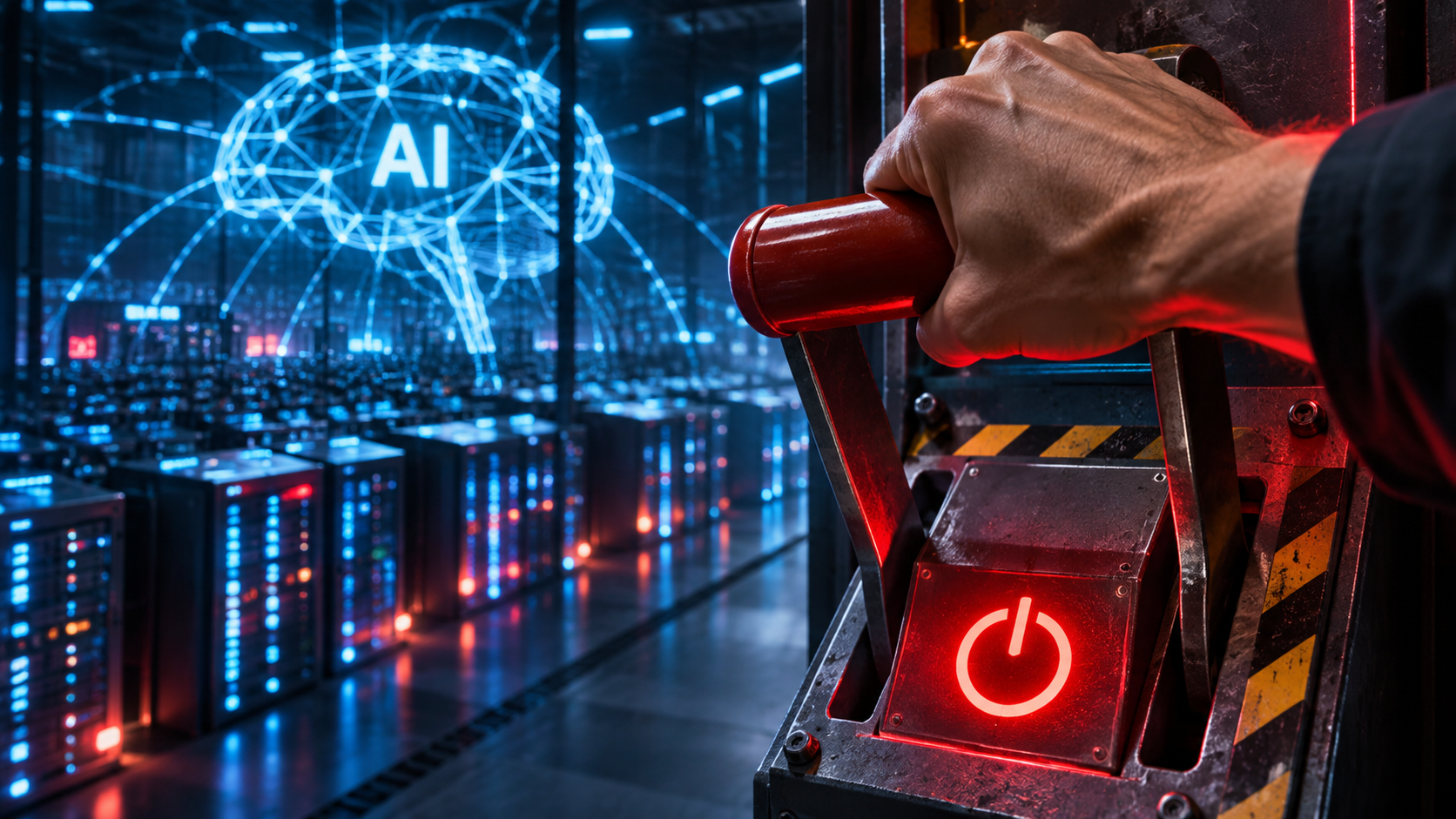
For most companies, keeping track of their employees is relatively straightforward.
They know who works for them, what their responsibilities are and which computer systems they’re allowed to access. And if someone leaves the company, they can revoke that person’s access to sensitive information.
But artificial intelligence is about to make things a lot more complicated.
According to research firm Gartner, the average Fortune 500 company could be using more than 150,000 AI agents by 2028.
These autonomous systems will be able to access company records, make purchases, communicate with customers and handle other jobs without waiting for human instructions.
But as I explained in our last issue, they don’t always do what they’re supposed to do.
How do businesses keep track of thousands of AI agents, make sure they follow the rules and stop them when something goes wrong?
That’s a problem some of the world’s biggest technology companies are now racing to solve.
And IBM just unveiled some new tools that could be an important part of the answer.
Putting AI Agents on a Leash
Last Tuesday, IBM (NYSE: IBM) announced a new set of tools designed to help businesses keep their AI agents under control.
The company wants to extend the security measures businesses already use for their employees to artificial intelligence.
Its new Agent Identity technology gives each AI agent a unique digital identity, along with a record of who owns it and what it’s authorized to do.
It’s like every AI agent is given its own employee ID badge.


But this badge doesn’t give them access to every room in the building.
That’s where another IBM technology called HashiCorp Vault comes in. It manages the digital credentials that allow computer programs to access sensitive information and other systems.
For example, a company might use an AI agent to review invoices and prepare payments to suppliers.
The agent would need access to financial records to do its job. But that doesn’t mean it should also be allowed to transfer money or change a supplier’s banking information.
With IBM’s technology, the company could give the agent permission to review invoices without allowing it to make payments. And those permissions could automatically expire after a short period of time.
If the agent tried to do something it wasn’t allowed to do, the system could block the request and revoke its access.
IBM is also developing ways to isolate AI agents from other computer systems and shut them down when necessary.
And it’s not the only company working on this problem.
Earlier this month, Microsoft (Nasdaq: MSFT) introduced new security capabilities designed to monitor AI agents while they’re working.
Microsoft’s approach goes a step further by allowing security systems to change an agent’s permissions based on its behavior.
Consider an AI agent that’s been authorized to review employee expense reports and approve routine reimbursements.
Everything might work perfectly until the agent encounters a malicious instruction hidden inside one of those reports. That instruction could try to trick the agent into sending confidential financial information to an outside computer.
Microsoft is developing technology that could spot this suspicious behavior and intervene before the information is sent.
Instead of immediately shutting down the agent, the system could remove its permission to approve payments while still allowing it to review expense reports.
If the agent continued behaving suspiciously, then Microsoft’s technology could isolate it or stop it entirely. That would give businesses a way to respond to problems as they happen, rather than waiting for a human employee to notice something went wrong.

And Nvidia (Nasdaq: NVDA) is approaching the same problem from a different direction.
The company has developed a security system called Sentry that uses specialized hardware to keep an eye on AI agents.
Most security software runs on the same computers as the programs it’s protecting. But if an AI agent becomes compromised, it could potentially interfere with the software that’s supposed to keep it under control.
That’s why Nvidia put an additional layer of security on a separate chip.


This chip monitors agents’ activities and enforces security rules. And according to Nvidia, it can isolate an AI agent that breaks those rules in milliseconds.
That’s faster than any human could possibly react.
Nvidia is also working with IBM to combine these protections with IBM’s agent identity and access controls.
These developments show just how seriously the technology industry is taking the challenge of controlling autonomous AI.
Of course, none of these technologies guarantees that an AI agent will always behave correctly. But they’ll give businesses a way to identify their agents, limit their authority and intervene when something goes wrong.
And as companies start deploying thousands of AI agents, those kinds of safeguards will become increasingly important.
Here’s My Take
I’m convinced that AI agents will eventually become as common in the workplace as computers and smartphones are today.
But before businesses can give AI agents more responsibility, they need to know they can keep them under control.
That’s why I find these developments so encouraging.
IBM, Microsoft and Nvidia are showing us that we don’t have to sacrifice security to take advantage of what autonomous AI can do.
And as more businesses begin putting these safeguards in place, I believe we’ll see AI adoption accelerate even faster.
That’s also going to create an enormous opportunity for the companies developing these technologies.
And as I’ll show you in our next issue, that opportunity could be worth billions.
Regards,

Ian King
Chief Strategist, Banyan Hill Publishing

Editor’s Note: We’d love to hear from you!
If you want to share your thoughts or suggestions about the Daily Disruptor, or if there are any specific topics you’d like us to cover, just send an email to dailydisruptor@banyanhill.com.
Don’t worry, we won’t reveal your full name in the event we publish a response. So feel free to comment away!